
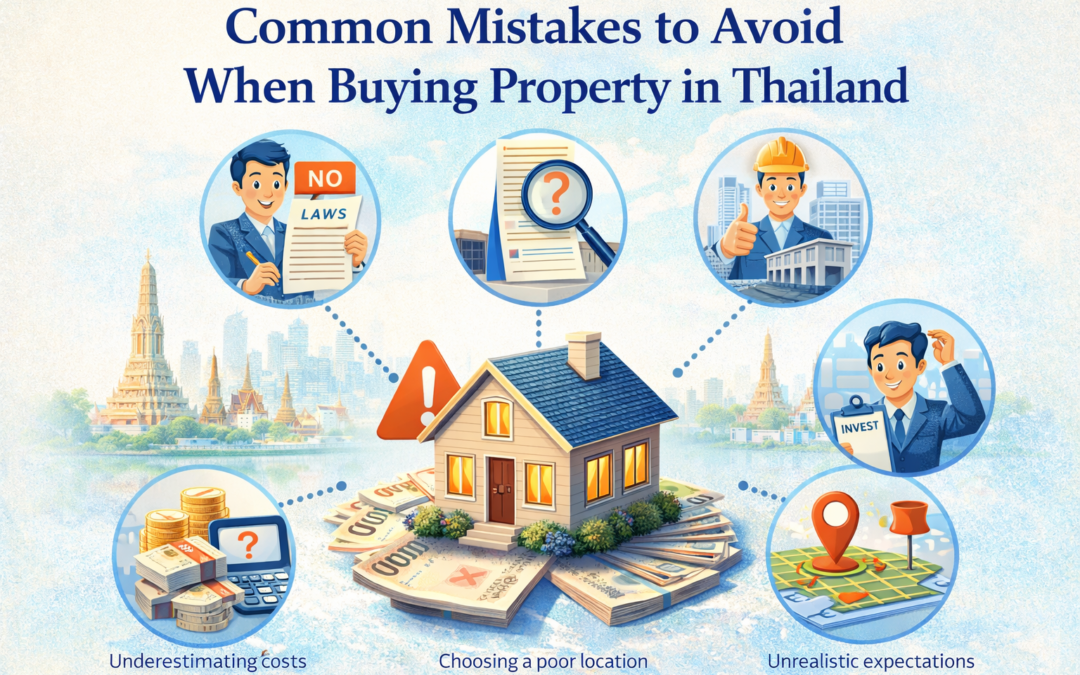
Buying property in Thailand can be a highly rewarding investment, whether you are purchasing a home, a holiday property, or a rental asset. With strong tourism, growing infrastructure, and increasing interest from both local and international buyers, Thailand remains one of the most attractive real estate markets in Southeast Asia. However, many buyers make costly mistakes due to lack of knowledge, poor planning, or rushing into decisions.
Property investment is a significant financial commitment, and even small mistakes can lead to long-term consequences. Understanding what to avoid is just as important as knowing what to do. From legal misunderstandings to financial miscalculations, these common errors can impact your investment returns and overall experience.
In this guide, we explore the most common mistakes to avoid when buying property in Thailand and provide practical advice to help you make informed decisions in 2026.
1. Not Understanding Property Ownership Laws
One of the biggest mistakes buyers make, especially foreign investors, is not fully understanding Thailand’s property ownership laws. While Thai citizens can own land directly, foreigners are generally restricted from owning land in their own name.
Foreign buyers are typically allowed to own condominium units, provided that foreign ownership within the building does not exceed the legal limit. However, buying houses or land involves more complex structures such as leasehold agreements or company arrangements.
Failing to understand these rules can lead to serious legal issues, including invalid ownership or disputes. Before purchasing any property, it is essential to clearly understand the legal framework and ensure that the ownership structure is secure and compliant.
2. Skipping Legal Due Diligence
Legal due diligence is a critical step that many buyers overlook. This process involves verifying the property’s title, ownership status, legal permissions, and any existing liabilities.
Without proper due diligence, buyers risk purchasing properties with hidden problems such as unpaid debts, incorrect ownership records, or construction issues. These problems can be difficult and expensive to resolve after the purchase is completed.
Conducting thorough legal checks ensures that the property is legitimate and free from complications. This step should never be skipped, regardless of how attractive the property may appear.
3. Underestimating the Total Cost of Investment
Many buyers focus only on the property price and ignore additional costs involved in the transaction. In reality, buying property in Thailand includes several extra expenses such as transfer fees, taxes, legal costs, and maintenance fees.
These additional costs can add around 3% to 7% to the total investment. There are also ongoing expenses such as utilities, repairs, and management fees that must be considered.
Failing to account for these costs can lead to financial strain and reduce your overall return on investment. A well-planned budget that includes all expenses is essential for a successful purchase.
4. Choosing the Wrong Location
Location is one of the most important factors in property investment, yet many buyers make decisions based solely on price or appearance. A low-cost property in a weak location may struggle to generate rental income or appreciate in value.
Investors should prioritize areas with strong demand, good infrastructure, and future growth potential. Properties near public transportation, business districts, and tourist attractions tend to perform better.
Choosing the right location ensures higher rental demand, better resale value, and long-term investment success.
5. Not Researching the Developer or Seller
Buying from an unreliable developer or seller can result in serious problems, including delayed projects, poor construction quality, or legal disputes. Many buyers fail to research the background and reputation of the developer before making a purchase.
It is important to review previous projects, check reviews, and confirm that the developer has a strong track record. For resale properties, verify that the seller has full ownership rights and that all documents are valid.
Working with trusted developers and verified sellers reduces risk and provides peace of mind.
6. Ignoring Market Trends and Timing
Another common mistake is investing without understanding market trends. Property values and rental demand can fluctuate based on economic conditions, supply, and infrastructure development.
Buying at the wrong time or in an oversupplied area can limit your returns. Investors should study market data, analyze demand, and understand future development plans before making decisions.
Timing and market awareness can make a significant difference in investment performance.
7. Overestimating Rental Income
Many investors assume that rental income will be higher than it actually is. While Thailand offers strong rental opportunities, actual returns depend on location, property type, competition, and market conditions.
Overestimating income can create financial stress, especially if you are using a mortgage. It is important to calculate realistic rental yields and consider potential vacancy periods.
A conservative approach ensures that your investment remains sustainable even during slower market periods.
8. Not Planning an Exit Strategy
Investors often focus on buying property without considering how they will sell it in the future. A lack of exit strategy can make it difficult to liquidate your investment when needed.
Factors such as location, demand, and property condition play a major role in resale value. Choosing properties with strong long-term appeal makes it easier to sell at a good price.
Planning your exit strategy from the beginning ensures flexibility and protects your investment.
9. Rushing the Buying Process
Property investment requires careful consideration, yet some buyers rush into decisions without proper research. This can lead to overpaying or selecting unsuitable properties.
Taking time to compare options, inspect properties, and review documents is essential. A well-informed decision is always better than a quick one.
Patience during the buying process can significantly improve your overall investment outcome.
10. Not Seeking Professional Guidance
Many buyers try to handle everything on their own, which increases the risk of mistakes. Property transactions involve legal, financial, and market considerations that require expertise.
Working with experienced professionals can simplify the process and help you avoid costly errors. Property consultants and mortgage advisors can provide valuable insights and support throughout the journey.
11. Ignoring Financing and Loan Structure
Buyers who plan to use a mortgage often fail to fully understand loan terms, interest rates, and repayment obligations. This can lead to financial pressure if repayments are higher than expected.
It is important to review all loan details carefully and ensure that repayments are manageable. Choosing the right financing structure can improve cash flow and reduce risk.
12. Failing to Consider Long-Term Maintenance
Many buyers focus only on the purchase and ignore long-term maintenance. Property ownership includes ongoing responsibilities such as repairs, upgrades, and management.
Neglecting maintenance can reduce property value and rental appeal. Planning for long-term upkeep ensures that your property remains attractive and profitable.
Tips for a Successful Property Investment
- Understand legal ownership rules clearly
- Conduct full due diligence before signing
- Plan your total budget, including all costs
- Choose locations with strong demand
- Work with experienced professionals
Following these principles can help you avoid common mistakes and achieve better results from your investment.
Why Work with Jida Assets?
Jida Assets provides expert property and mortgage advisory services in Thailand. We help clients navigate the buying process, understand costs, and identify the best opportunities based on their goals.
With experience in both real estate and banking, Jida Assets ensures a smooth, transparent, and secure investment journey.
Conclusion
Buying property in Thailand offers excellent opportunities, but avoiding common mistakes is essential for success. By understanding legal requirements, planning your finances, and choosing the right location, you can protect your investment and maximize returns.
Taking a careful and informed approach will help you make smarter decisions and achieve long-term success in the Thai property market.
Contact Jida Assets
If you are planning to buy property in Thailand, contact Jida Assets today for expert advice and support. Our team is ready to guide you through every step of the process with confidence.